
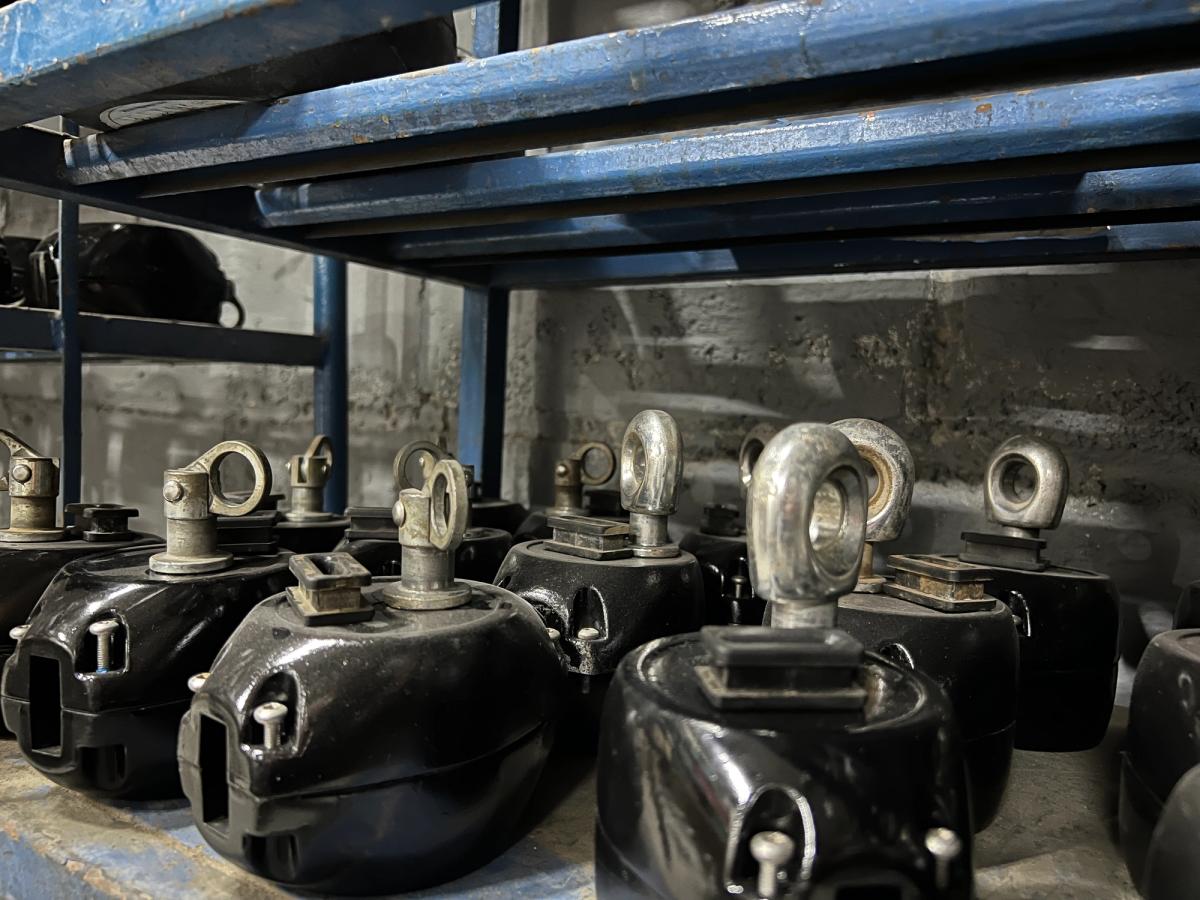
An eyebolt welded to a beam, an improvised clamp, or a cable tied around a column may look solid at first glance. However, none of these elements is a certified anchorage device under NBR 16325, the Brazilian standard for anchorage devices.
What Is an Anchorage Device Certified Under NBR 16325?
It is a device that meets the requirements and tests of ABNT NBR 16325-1:2024 (or NBR 16325-2, for type C). NR-35 requires the anchorage device to be certified, manufactured to national technical standards under the responsibility of a legally qualified professional, or designed by that professional (Annex II, item 3.3). An improvised fixing meets none of these conditions.
What Force Limit Applies to the Anchorage?
NR-35 requires the personal protection system to be selected so that the impact force transmitted to the worker is no more than 6 kN, about 600 kgf (item 35.6.7).
That is why the anchor point does not work alone: it operates together with energy-absorbing elements, such as energy absorbers or self-retracting lifelines, which ensure controlled deceleration of the user.
The 5 Types of Anchorage Devices (A to E)
Types A, B, D, and E are covered by NBR 16325-1:2024; Type C is covered separately by NBR 16325-2, because it works on a different principle (a flexible line, not a rigid point).
| Type | Mechanical Fixing Principle | Structural Application | Standard |
|---|---|---|---|
| Type A | Fixed structural anchorage in concrete, steel, or solid masonry | Eyebolts and fixed points for stationary work | NBR 16325-1 |
| Type B | Temporary, transportable anchorage device | Tripods for confined spaces and mobile beams | NBR 16325-1 |
| Type C | Horizontal flexible anchor line in wire rope | Roofs and long industrial walkways | NBR 16325-2 |
| Type D | Rigid anchor line in a suspended metal rail | Loading docks and height-restricted areas | NBR 16325-1 |
| Type E | Counterweight anchorage device relying on base friction | Slabs and flat roofs where drilling must be avoided | NBR 16325-1 |
The Link Between the Anchor Point and PPE Maintenance
Investing in certified anchor points is pointless if the equipment connected to them is internally degraded from lack of maintenance.
Retraction springs without tension, oxidized ratchets, or worn webbing compromise the entire system at the moment it is loaded.
How Anchor Solves This
Anchor runs a specialized center for self-retracting lifeline maintenance developed in partnership with MG Cinto and installs certified lifelines with a technical report and an engineering liability record (ART).
Next Step
Now that you know what NBR 16325 requires of an anchorage device, send the list of anchor points and self-retracting lifelines in your company to receive a technical inspection plan from Anchor's engineering team.