
Technical notice: this content is informational, covering workplace safety and industrial rescue engineering. It does not replace medical protocols or pre-hospital care guidelines issued by qualified healthcare professionals.
A worker suspended and motionless in a harness, even without having suffered an impact fall, can lose consciousness and face life-threatening risk if not rescued quickly.
What Is Suspension Trauma?
Suspension trauma is the risk that arises when a person remains suspended and motionless in a harness, even without a fall impact. OSHA covers it in Safety and Health Information Bulletin SHIB 03-24-2004 as orthostatic intolerance. NR-35 calls this situation inert suspension: the worker remains suspended by the safety system until help arrives.
Why Motionless Suspension Is Dangerous
When a person hangs motionless, whether from fainting, exhaustion, or a sudden medical event, the legs stop helping blood return to the heart and it pools in the lower limbs. With less blood reaching the brain, the worker can lose consciousness. Among aggravating factors, the OSHA bulletin lists inability to move the legs, pain, shock, injuries from the fall, and fatigue. That is why rescue time is the single most critical factor in the entire operation.
What Does NR-35 Require for Emergency and Rescue?
Chapter 35.7 of NR-35 (Emergency and Rescue) requires the organization to establish, implement, and maintain response procedures for work-at-height emergencies. Item 35.7.1 sets out what those procedures must consider:
| Requirement | What NR-35 Asks For |
|---|---|
| Rescue hazards | The hazards associated with the rescue operation itself (35.7.1, a) |
| Team | The required emergency and rescue team and its sizing (35.7.1, b), trained to perform the rescue and provide first aid (35.7.3) |
| Time | The estimated rescue time (35.7.1, c) |
| Techniques and equipment | Techniques, personal or collective equipment, and an available rescue system that reduce inert suspension time (35.7.1, d) |
A document filed away in a physical folder, without a trained team and without equipment positioned at the work front, meets neither the legal requirement nor protects the worker.
What the Team Must Be Ready to Do
Besides requiring a team trained in rescue and first aid (item 35.7.3), NR-35 requires rescue planning that reduces inert suspension time (item 35.5.5.1, sub-item k). The OSHA bulletin also recommends training the team to recognize the signs of orthostatic intolerance and continuously monitoring the suspended worker until retrieval. Care for the victim after retrieval must follow the protocol set by healthcare professionals.
Technical Rescue on Mobile Work Fronts
Mobile work fronts, such as trailer unloading, cargo lashing, or slope maintenance, often face greater vulnerability because they lack fixed anchor points or pre-installed support structures.
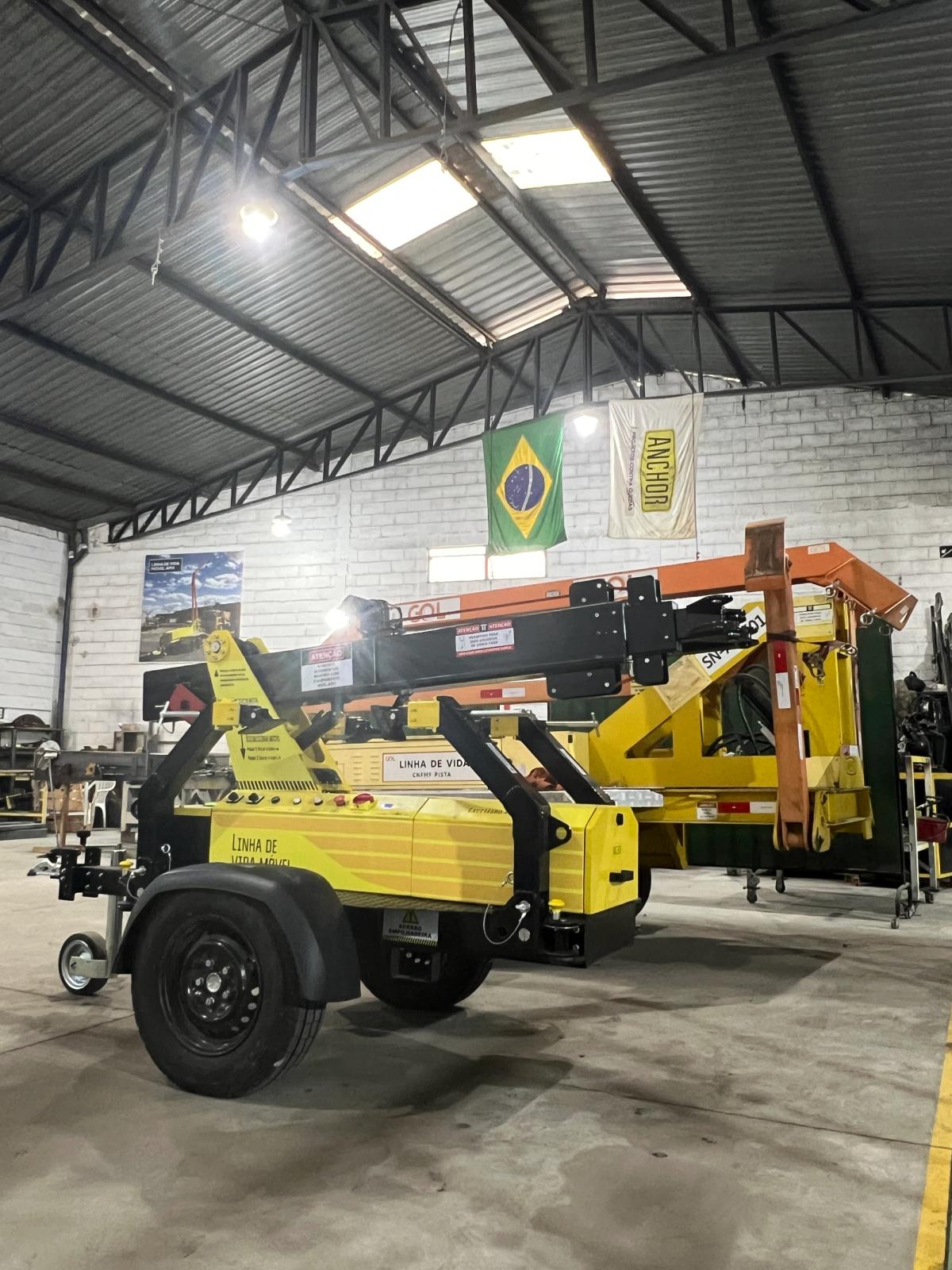
AMX, Anchor's patented mobile lifeline, was designed with two dedicated rescue points, in addition to anchorage for two simultaneous users, ensuring rescue capability travels with the operation wherever it happens.
Next Step
Now that you understand what suspension trauma is and what the NR-35 rescue plan requires, assess whether your plan matches the real field geometry. Schedule a technical demonstration of the AMX with Anchor's engineering team.