
Self-retracting lifelines and lanyards are essential components connected to the full-body harness. Both stop a fall before the worker hits the ground, but they work on completely different physical principles.
What Is the Difference Between a Self-Retracting Lifeline and a Lanyard?
A self-retracting lifeline locks automatically by inertia and follows the user's movement; a lanyard has a fixed length and relies on an energy absorber to dissipate the impact. Using the wrong component compromises the arrest.
| Feature | Self-Retracting Lifeline | Safety Lanyard |
|---|---|---|
| Operating principle | Spring and automatic inertial locking under acceleration | Fixed-length connection with an energy absorber |
| Use with a lifeline | Works connected to horizontal or vertical lifelines | Used directly on structural anchor points |
| Arrest distance | Short braking distance, minimizing fall clearance | Longer travel while the absorber deploys |
| Ideal application | Loading and unloading, machine maintenance, and large areas | Fixed work points with a smaller range of movement |
| NR-35 requirement | Periodic inspection at least every 12 months (item 35.6.6.3), per the manufacturer | Integrated energy absorber mandatory since 01/01/2026 (MTE Ordinance 1,680/2025) |
How They Differ in Movement
The self-retracting lifeline retracts its cable or webbing automatically, following the worker's movement without leaving slack in the system. In a sudden acceleration, the internal mechanism locks almost instantly.
The lanyard has a predetermined length and works by limiting the range of movement or arresting the free fall. Since January 1, 2026, under MTE Ordinance 1,680/2025, every lanyard used for fall arrest must have an integrated energy absorber.
Consequences of the Wrong Specification
Swapping a self-retracting lifeline for a lanyard where headroom is low can cause the worker to hit the floor before the absorber finishes decelerating them. In an audit or after an accident, the technical investigation reviews the compatibility calculation between the system and the available clearance.
Why Preventive Maintenance and Inspection Matter
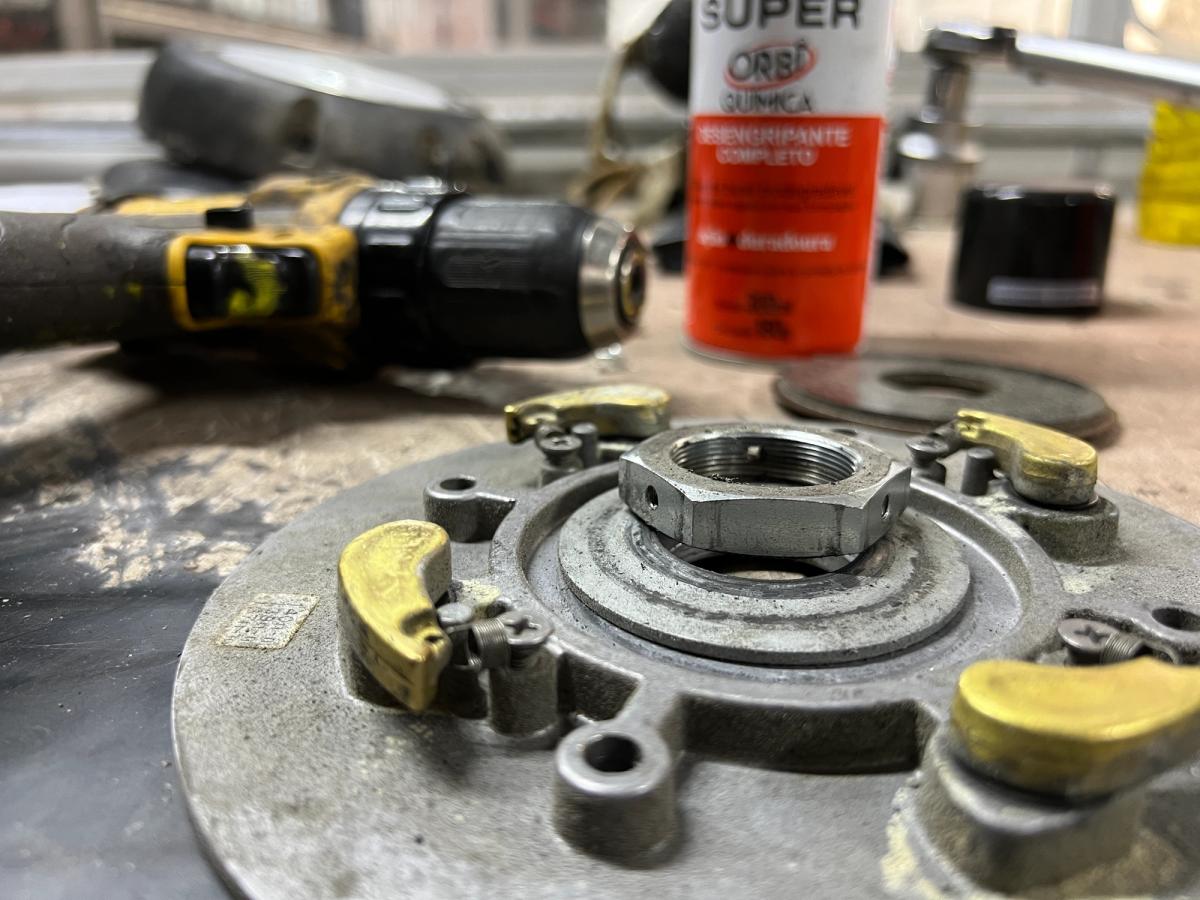
The mechanical integrity of a self-retracting lifeline depends on internal components such as coil springs, locking pawls, and energy-absorbing webbing. Internal damage cannot be detected by a simple external visual inspection.
How Anchor Solves This
Anchor runs a specialized center for self-retracting lifeline maintenance developed in partnership with MG Cinto, with an internationally trained team that issues a technical report, an engineering liability record (ART), and a warranty for each unit.
Next Step
Now that you know the difference between a self-retracting lifeline and a lanyard, send your inventory list (brands, models, and last service dates) and request an inspection schedule from Anchor's engineering team.