Manufacturer · Wire rope, rail and mobile lifeline
Lifelines for Work at Height: fixed, rigid or mobile
A lifeline is the anchorage system that keeps a worker connected while moving at height, through a full-body harness and a fall arrester or lanyard. Brazil's NR-35 requires fall protection for any work more than 2 meters above a lower level where there is a risk of falling. The system can be fixed wire rope, fixed rigid rail or mobile.
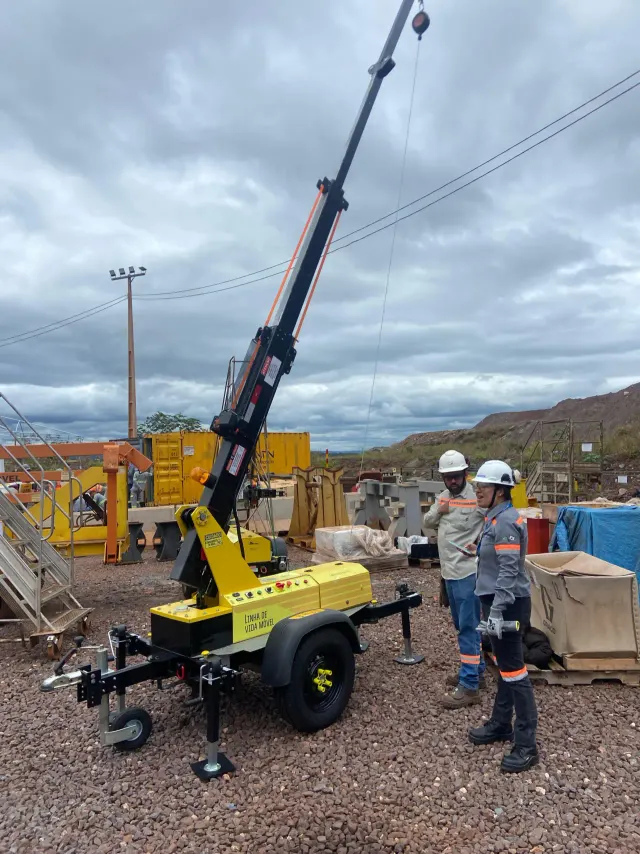
Anchor designs, manufactures and tests all three. It is also the maker of the AMX, the patented mobile lifeline that is towed to the work point and ready in 30 seconds, with no civil works, no scaffolding and no structure to carry the anchorage.
NR-35 applies to any activity more than 2 meters above the lower level where there is a risk of falling. In those cases the company needs a risk analysis, trained workers and a fall protection system suited to the activity, plus an emergency and rescue plan.
The lifeline is part of the anchorage system. Annex II of the regulation requires that system to have a design and technical specification under the responsibility of a legally qualified professional, that the structure carrying it withstands the maximum applicable force, and that anchor points are marked and inspected.
It is sized for the site, the activity and the number of users.
It needs documentation.
Design, structural calculation and the engineer's responsibility record go with the system, and they are what you show in audits and investigations.
Rescue is part of the equation.
A system that arrests the fall but does not allow a suspended worker to be retrieved quickly is incomplete.
The three types of lifeline
Each type solves one scenario. The choice comes from the site geometry, how often the point is used and where the work happens.
Fixed wire rope
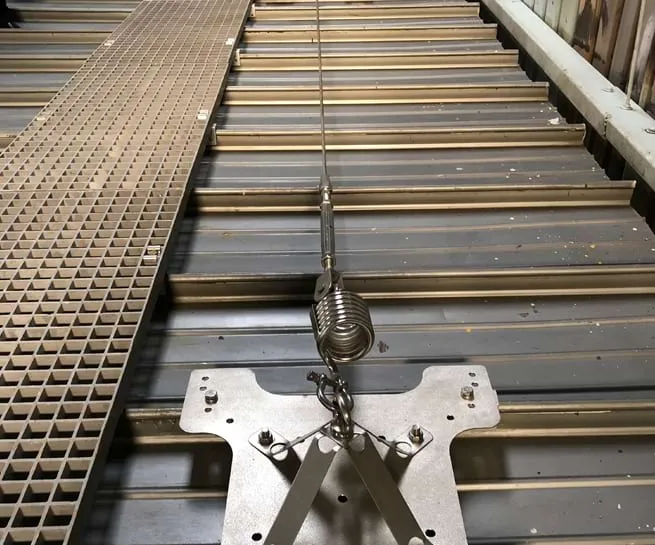
Stainless steel wire rope tensioned between supports, with an energy absorber. It is the most common solution for roofs and long routes where there is enough clearance below the worker. On roofs, Anchor uses its spider-type system, fixed on top of the roof sheets without piercing the roof.
Best for: roofs, walkways, fixed routes in frequent use.
Watch out: the cable deflects during a fall, and that sag must fit within the fall clearance.
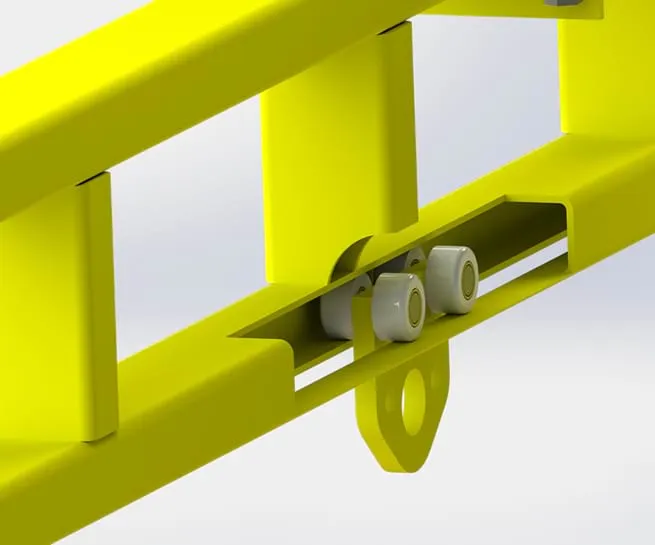
Metal profile with an enclosed bearing trolley, installed above the worker. It does not deflect under load, so it protects where wire rope fails the calculation: on top of trailers, at docks, on mezzanines and in low-ceiling warehouses. The trolley is shielded from dust, an advantage in mining and cement plants.
Best for: fixed points with restricted clearance and daily use.
Watch out: it requires a properly sized supporting structure, existing or new.
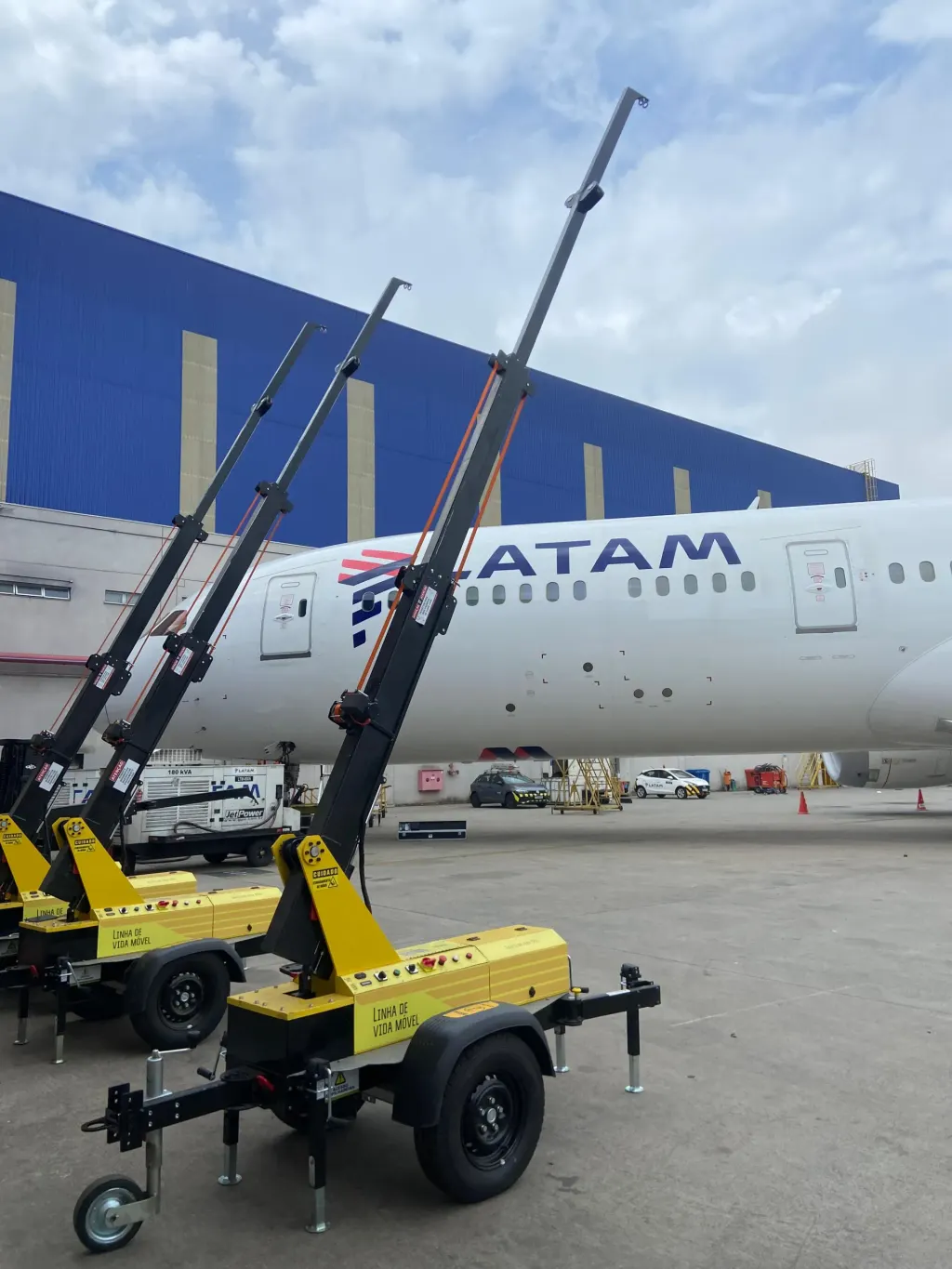
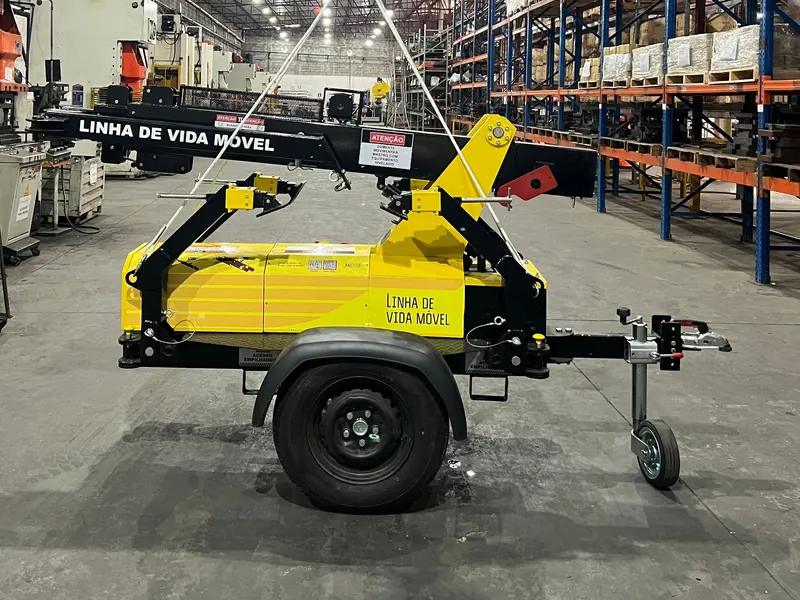
Self-supporting unit with its own base and a 7 or 12 meter mast that brings the anchorage to the work. It is towed by an ordinary car, forklift or overhead crane, stabilizes on the ground and is ready in 30 seconds. It serves 2 users of 140 kg at the same time and has 2 factory-fitted rescue points.
Best for: work fronts that move, areas without structure, jobs that depend on scaffolding today.
Edge: patented, manufactured by Anchor, validated by pendulum test.
Every fixed lifeline starts from the same premise: at the exact work location there is a structure able to take the force of a fall, and that location does not change. When the premise holds, wire rope and rail work very well. The AMX was created for everything that falls outside it, and for what is expensive even when it holds.
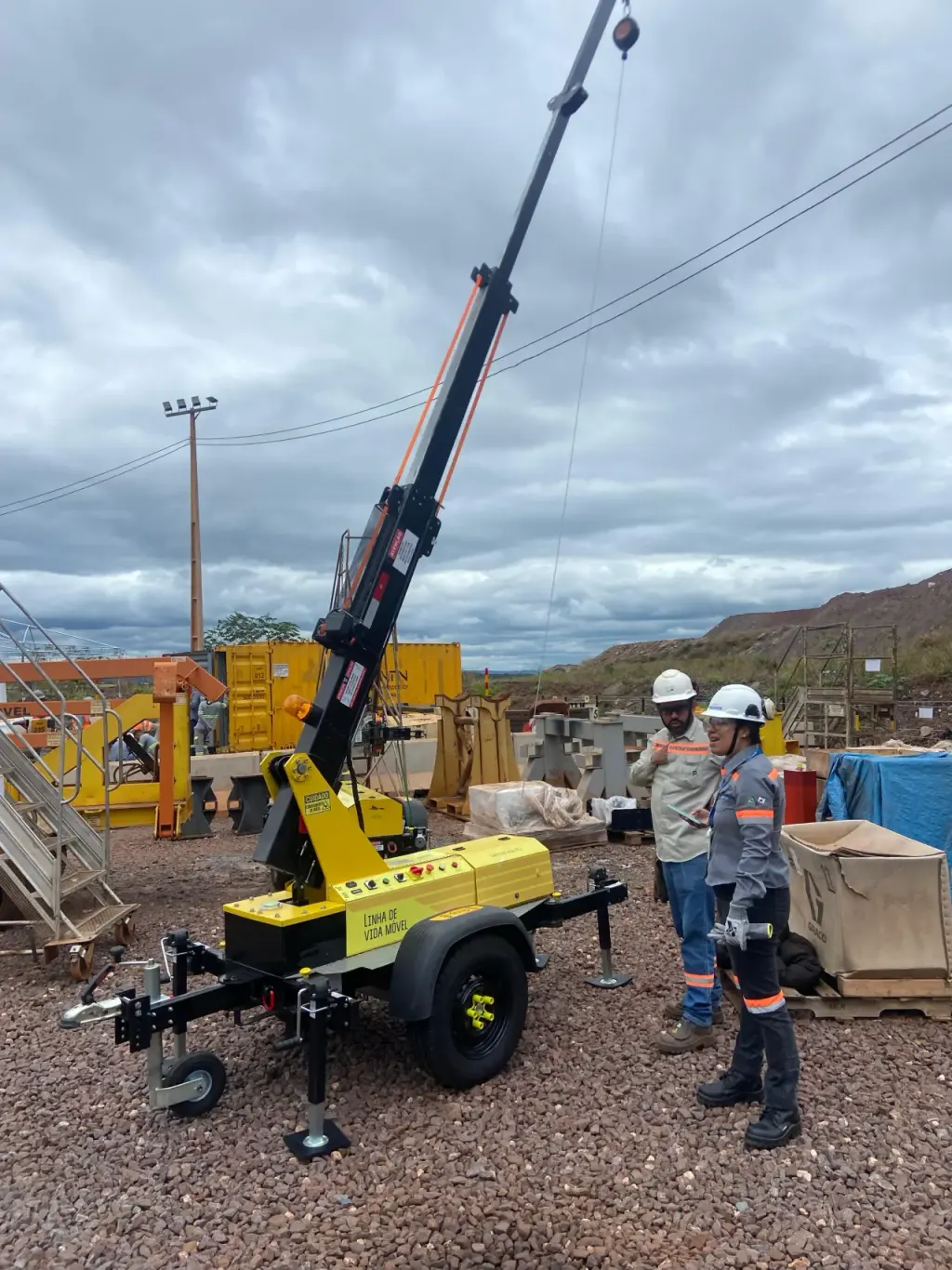
AMX operating at Anglo American
01
It replaces scaffolding, and the time it consumes
For a quick job at height, putting up scaffolding means hauling tubes, a crew of erectors, cordoning off the area, a work permit, a release inspection and then the whole thing again in reverse. During erection itself, someone works exposed to a fall. The AMX arrives on tow, stabilizes and raises its mast in 30 seconds. There is nothing to erect or dismantle.
02
No civil works, no structure
No foundation, no holes in the floor, no beam to reinforce. That solves the places where there is no structure (open yards, slopes, remote mine areas) and also those where it exists but cannot be loaded: buildings that do not allow intervention, structures without calculations, reinforcement that would mean shutting the area down.
03
One unit, many work points
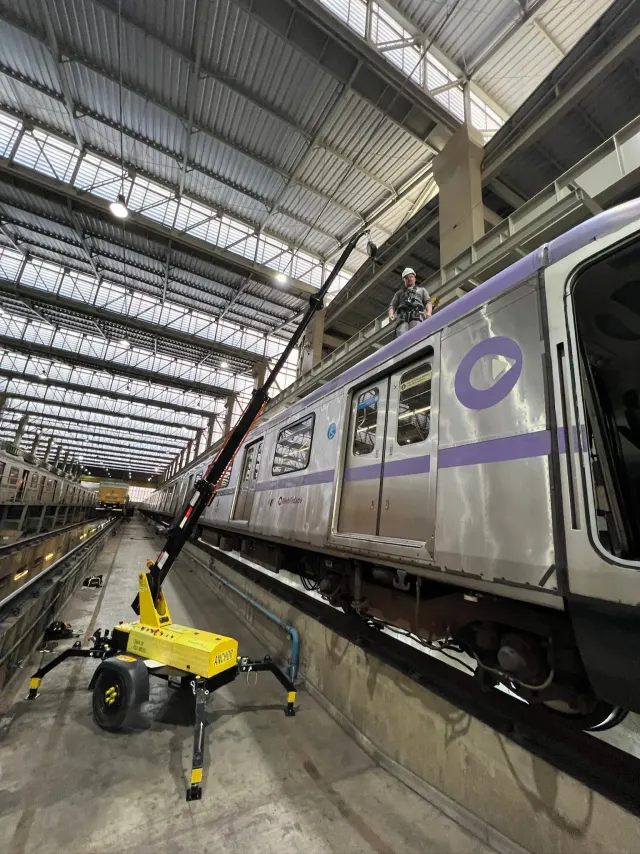
A fixed line protects one point. A yard where trailers park in different bays, a track with several railcars or a long slope would need one structure per position. The AMX goes where the work is today and tomorrow moves somewhere else. You invest once.
04
Ready when the operation needs it
Emergency maintenance, a planned shutdown, a new work front while the fixed design is still pending, an old system taken out of service at inspection: in all of these, waiting weeks for an installation means stopping the activity or working unprotected. The AMX covers that gap the same day.
05
Rescue already on board
NR-35 requires an emergency and rescue plan, and it is the part most often left on paper. The AMX has 2 dedicated rescue points in addition to its 2 work points, giving the rescue plan an anchor point that is ready, in the right place, with no improvisation.
06
It never touches what is being protected
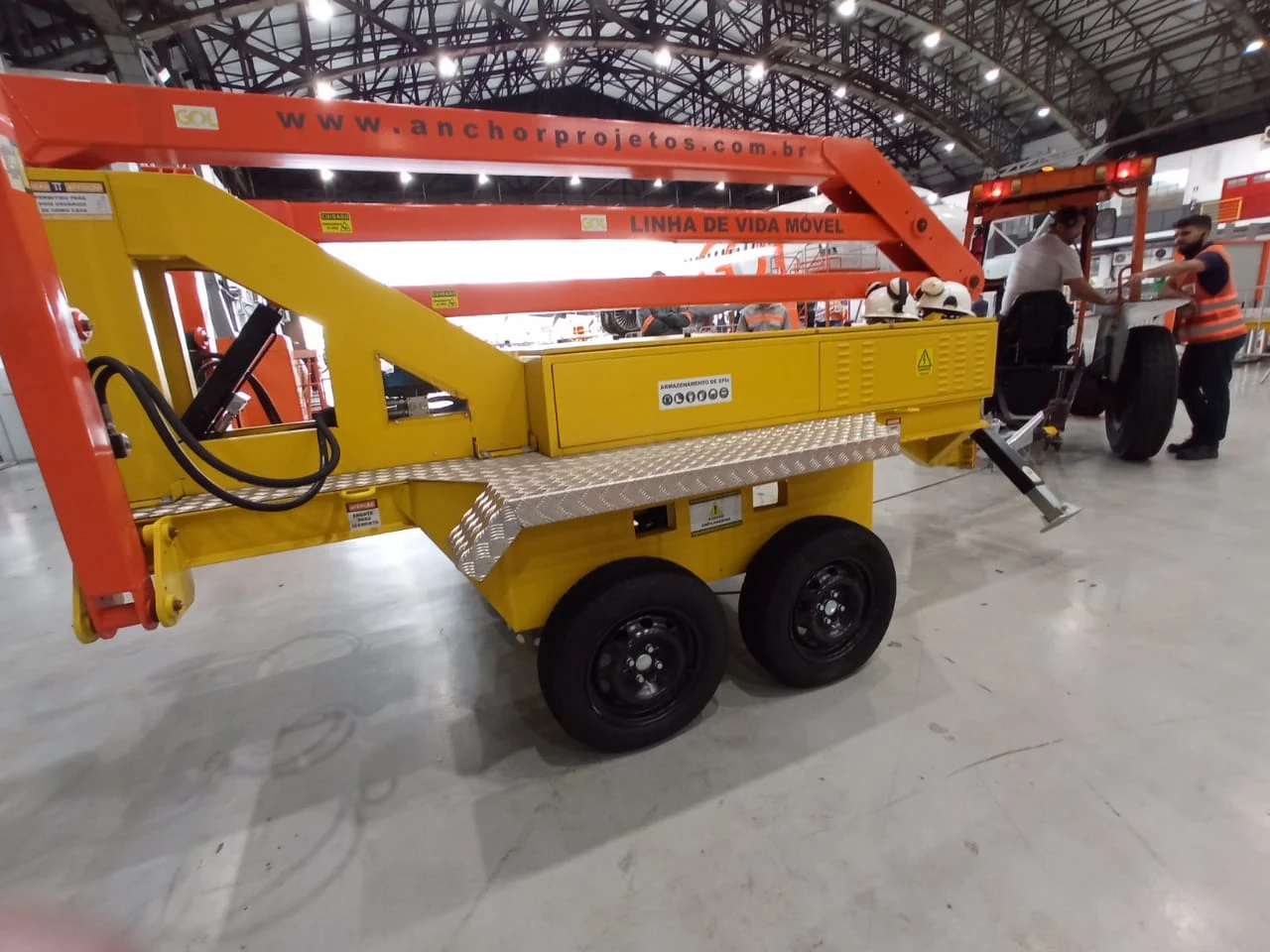
In a hangar, the floor must stay clear and the fuselage cannot take any fixing. The AMX is positioned next to the aircraft without touching it and leaves after the job. The same goes for machines, railcars and truck bodies.
Built for everyday field work
Road-legal: towed by a driver with a standard car license, in line with Brazilian traffic law.
Inside the plant, moved by forklift, overhead crane, truck crane or by the operator.
Electro-hydraulic drive, manual or by remote control, with a battery rechargeable on 110/220 V.
Built-in drawer for PPE and tools, so the protective equipment travels with the anchorage.
Works on any terrain, indoors or outdoors.
Tested and maintained by the manufacturer
The AMX is rated for two simultaneous users of 140 kg and was validated by pendulum test, the dynamic test that reproduces a real fall, in Anchor's own laboratory. It meets NR-35, NBR 16325 and NBR 14628. Maintenance of the unit and its on-board fall arresters is carried out by Anchor itself, with a technical report.
The first prototype came out in 2017. Since then the AMX has been redesigned several times based on field use, each version smaller, lighter and with more working height.
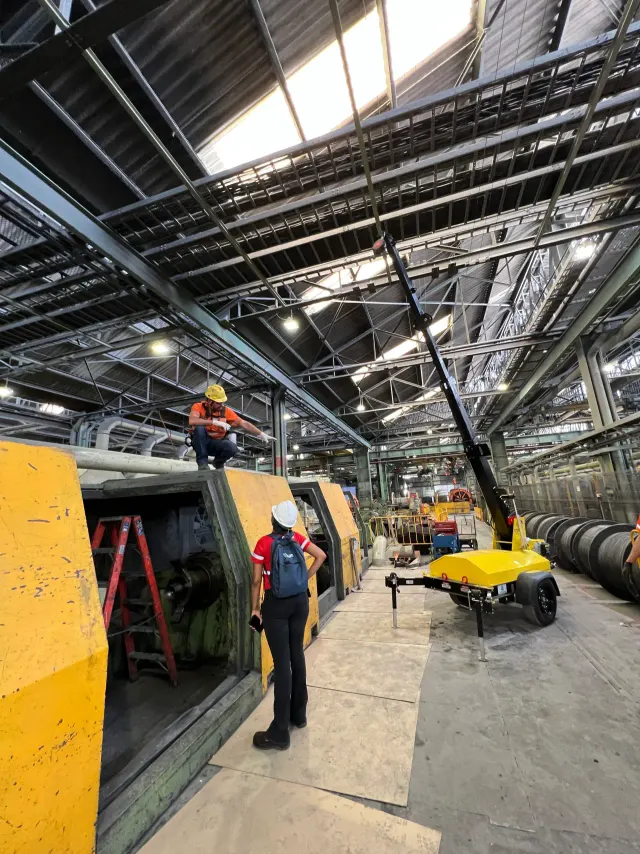
AviationGOL and LATAM hangars and aprons, with three units operating at the same time at LATAM.Rail and metroTrain maintenance at the São Paulo Metro.Heavy industryHydro and Belgo ArcelorMittal, within the production routine.MiningAnglo American operations, on uneven terrain with no fixed infrastructure.
Also in operation at BH Airport and in trailer unloading and big bag rigging.
Which lifeline does your operation need?
Answer four questions about the work point:
1
Does the work always happen in the same place?
Yes: go to the next question. No, it changes position: AMX.
2
Is there a structure able to take the anchorage, with structural calculations?
Yes: go to the next one. No, or reinforcing would mean shutting the area: AMX, or structural erection if the point is used daily.
3
Is there enough clearance below the worker?
Yes: wire rope. No, as on top of trailers, docks or mezzanines: rigid rail.
4
Does this job depend on scaffolding or a platform today?
If so, compare the cost of each erection with the AMX before deciding.
Many plants end up with all three: fixed systems at daily-use points and the AMX for everything else.
What separates a system that protects from one that is merely installed
Fall clearance
Fall clearance is the free height that must exist below the worker for the system to finish stopping the fall before they hit the floor or an obstacle. It adds up the lanyard length or fall arrester travel, absorber deployment, the worker's height, harness stretch, line deflection and a margin. With a lanyard and absorber, the total easily exceeds 6 meters. That is why the system type and the anchorage position decide whether protection works.
Design and engineering responsibility
The design defines the structure used, the loads on each part, the number of users and the fall clearance. It comes with a structural calculation and the responsibility record of a qualified engineer. Anchor delivers design, manufacture, installation and maintenance under the same technical responsibility, so there are no suppliers pointing at each other if something goes wrong.
Structure
A beam that carries a roof without any problem may never have been designed for the peak force of a fall. The structure is checked first, and reinforced or replaced when needed.
Testing
A component certificate does not prove the assembly works. Anchor tests the solutions it supplies in its own laboratory, including dynamic drop testing.
Fall Clearance Calculator
Check whether the clearance on site fits the system before you buy. Use the values from the manufacturer's manual and the design.
Required fall clearance
6.55 m
Available clearance
5 m
1.55 m short. With this data, the worker may hit the floor or an obstacle before the fall is arrested. Alternatives: a higher anchorage, a rigid rail (negligible deflection) or the AMX, with the anchorage at the top of the mast.
NR-35 defines fall clearance as the minimum space below the anchor point, for a lanyard, or below the user's feet, for a fall arrester, and requires the risk analysis to consider it (item 35.6.11, subitem e).
A screening estimate. It does not replace the design calculation, made by a legally authorized professional with the manufacturer's data.
Inspection, maintenance and systems from other suppliers
NR-35 requires two inspections of the anchorage system (Annex II, item 4.1): the initial one, after installation, alteration or relocation, and the periodic one, at intervals of no more than 12 months, following the design, the manufacturer's instructions and the applicable standards. Before each use, the worker also carries out the routine inspection of the equipment (item 35.6.6.2). Inspection checks corrosion, deformation, fixings, already-deployed absorbers, cable condition and anchor point marking.
Anchor inspects and validates systems installed by other suppliers, including those left without support. If the system is taken out of service, the AMX can keep the work front protected until the correction is ready.
How much does a lifeline cost
There is no price per meter that holds for every case, and be wary of anyone who quotes one without seeing the site. The cost depends on:
Survey and design: site visit, fall clearance calculation, structural calculation and engineering responsibility record.
Structure: using the existing one, reinforcing it or building one.
System: type, length, number of spans and users.
Installation: access, height and whether the area can stop.
Life cycle: inspections and maintenance over the years.
For the AMX the math is different: it is a one-off investment, with no civil works, that serves many points. The right comparison is with what it replaces, that is, the fixed structures each position would need or the recurring cost of putting up scaffolding:
Real scaffolding cost = rental + (erection hours × labor cost per hour) + cost of production downtime
It is the anchorage system that keeps a worker connected while moving at height, through a full-body harness and a fall arrester or lanyard. It can be fixed wire rope, fixed rigid rail or mobile, like the AMX. It is part of the fall protection system required by Brazil's NR-35.
Which Brazilian regulation covers lifelines?
NR-35, Work at Height. Its Annex II covers anchorage systems: design by a legally qualified professional, structural strength, marking and inspection. On construction sites, NR-18 also applies. Components follow ABNT standards, such as NBR 16325 for anchor devices.
Does a lifeline need a design and an engineer's sign-off?
Yes. The anchorage system needs a design and technical specification under the responsibility of a legally qualified professional, with a structural calculation. The engineer's responsibility record (ART) documents this and is one of the first documents requested in an audit or after an accident.
What is the difference between a fixed and a mobile lifeline?
A fixed lifeline is installed on a structure at a work point that does not change. A mobile lifeline has its own base and goes to the work. The AMX, Anchor's mobile lifeline, is towable, needs no civil works or structure, is ready in 30 seconds and serves two users with two rescue points.
Can a mobile lifeline replace scaffolding?
For many jobs at height, yes. The AMX eliminates erection, dismantling, the erection crew and the fall risk during scaffold erection. The comparison should include rental, erection hours and production downtime, not just the daily scaffolding rate.
How many people can use the same lifeline?
It depends on the design: the number of users per span is set when the system is sized and must be marked on the system. Exceeding it raises force and deflection beyond what was calculated. The AMX serves two users of 140 kg at the same time, plus two rescue points.
Wire rope or rigid rail?
Wire rope is simpler and more economical when there is enough clearance, but it deflects during a fall. Rigid rail practically does not deflect and protects where height is short, such as on top of trailers and at docks. The choice comes from the site's fall clearance calculation.
Can a roof lifeline be installed without drilling the roof?
Yes. Anchor's spider-type system is fixed on top of trapezoidal, standing seam, galvanized or long-span roof sheets without through-holes, which preserves the roof's watertightness. It is made of stainless steel and validated in Anchor's own laboratory.
How often should a lifeline be inspected?
NR-35 requires an initial inspection of the anchorage system after installation, alteration or relocation, and a periodic inspection at intervals of no more than 12 months (Annex II, items 4.1.1 and 4.1.2). Before each use, the worker carries out the routine inspection (item 35.6.6.2). Heavy use or aggressive environments justify a shorter interval. Elements that have suffered fall impact must be rendered unusable and discarded, unless restoration is provided for in a technical standard and by the manufacturer (item 35.6.6.5).
Does Anchor service systems from other suppliers?
Yes. Our engineers inspect and validate systems installed by others throughout Brazil and indicate what to keep, reinforce or replace. If the system is taken out of service, the AMX can cover the work front while the correction is carried out.
Tell us how work at height happens in your operation
Tell us where the work happens, how often and what you use today (scaffolding, a fixed line, nothing). Anchor's engineers will reply with the recommended solution: wire rope, rail, AMX or a combination, with the reasoning behind it.